
Creativity Heals What Combat Breaks
On creativity, PTSD, and rebuilding what war tries to erase

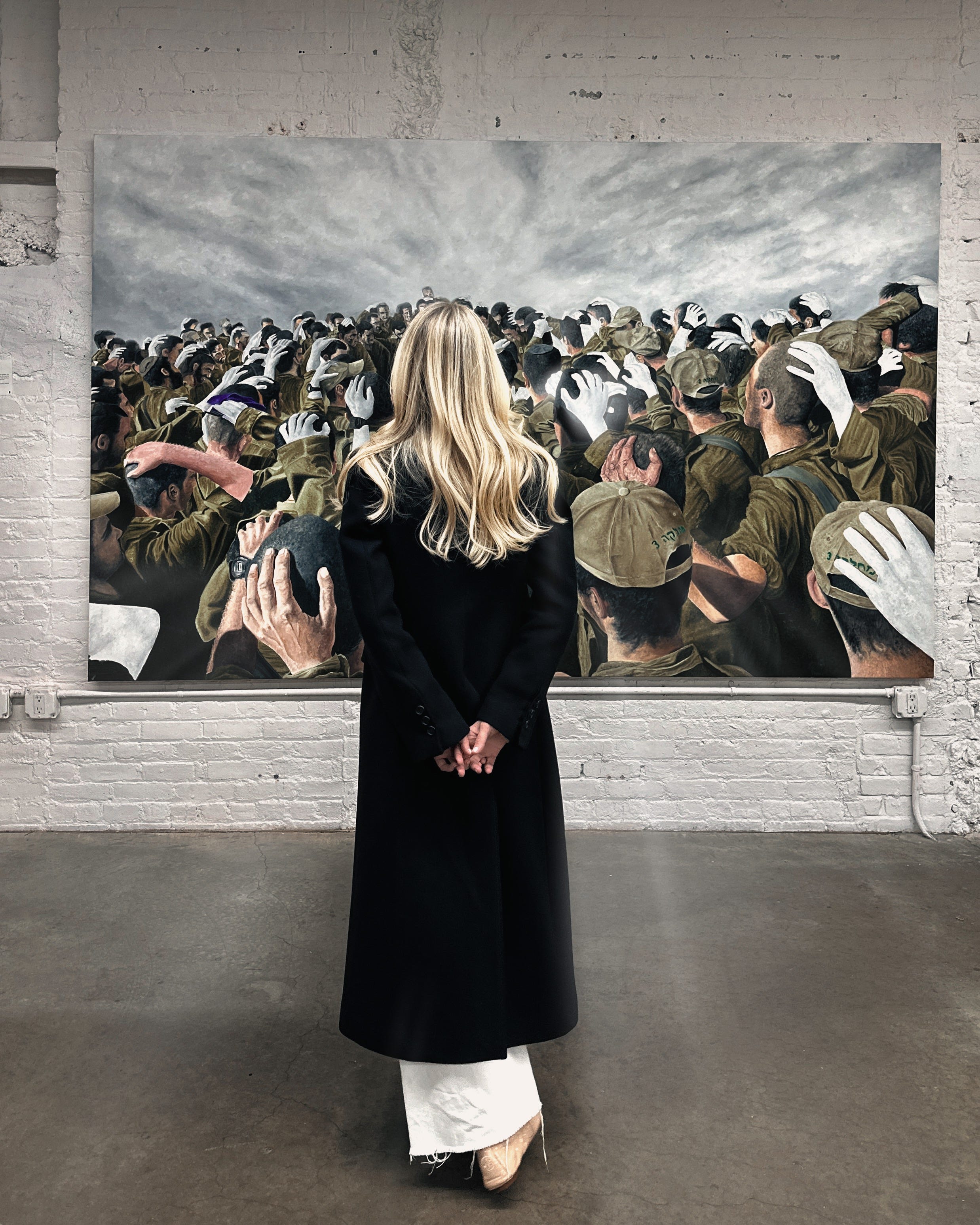
Physical wars end long before the emotional ones. The body may leave the battlefield, but the nervous system often does not. It lingers in hypervigilance, in fractured sleep, in the echo of missions that replay in the dark hours before dawn. In the questions that refuse to loosen their grip — What could I have done differently? Who did I fail? Why did I survive? Who am I? In the constant internal negotiation to remain human in the aftermath of inhumanity. This is where the real war begins. And this is where creativity becomes not a luxury, but a lifeline.
I have witnessed the healing capacity of creativity not as theory, but as survival. During my cancer journey, creativity became my oxygen. It was how I metabolized fear, uncertainty, grief, and hope when language collapsed under its weight. It gave shape to emotions too complex and overwhelming to articulate. It restored a sense of authorship over my own story at a time when my body no longer felt like it belonged to me. Creativity gave my nervous system permission to exhale. It reminded me that I was still alive, still choosing, still becoming. And now, as a tidal wave of PTSD blankets an entire nation, this truth has never felt more urgent.
A few nights ago, we gathered inside Tomer Peretz’s studio in New York — a space that feels less like a gallery and more like a sanctuary. A place that holds stories, heroes, grief, courage, memory, and extraordinary healing. A studio with a mission: to support the emotional rehabilitation of soldiers and hostages. Hostages we have fought for. Hostages whose families I have sat beside in their unbearable waiting. Lives now forever divided into before and after. Every piece in Tomer’s studio carries a pulse behind it. Nothing is decorative. Nothing is abstract. Each work is a living artifact layered with testimony, resilience, and reclamation.
As Tomer walked us through one of his deeply evoking works, Angels Within Us, we moved slowly toward a powerful portrait of Russian-Israeli Andre Kozlov. I stood in front of it, suddenly back in Israel — remembering hugging his mother, fighting for his return, praying through the long months of his captivity. Andre had been held hostage by Hamas for 245 days. The weight of those memories pressed into my chest. And then, almost impossibly, I felt myself pulled back into the room. Andre had walked out of the studio behind us. He was standing there. Alive. Healthy. Sharing his story now through art. We said hello and I whispered thank you to G-d.
This is where trauma is not hidden. It is metabolized. This is where survival begins to transform into meaning.


The 8 Project exhibit was not built from symbolism. It was built from truth — the kind most people instinctively turn away from because it demands something of us. Tomer created this body of work alongside more than 1,500 survivors whose lives were ruptured in ways no human being should ever have to endure. These are the voices of hostages buried for months in dark tunnels, soldiers dragged back from clinical death, neighbors forced to witness rape and murder, and children who survived by lying motionless beside their parents’ bodies. There is also a towering tree constructed from body bags — created by those from ZAKA who were tasked with recovering the dead and placing physical remains inside them. Those who carried what no human being should ever have to carry. Tomer worked directly with stories most humans cannot stand to hear, let alone hold. But this artwork does not exist to document horror. It exists to illuminate resilience. In The 8 Project’s healing-through-art programs, each piece becomes a victory — a reclamation of identity, a refusal to surrender spirit, a declaration that even after atrocity, the human soul can still choose life. These works do not exist to tell you what happened. They exist because it did. And because those who lived through it deserve not only to survive, but to be seen.

One of the most powerful aspects of Tomer’s model is that healing does not happen in isolation. For soldiers experiencing PTSD, The 8 Project brings together veteran peers who fought in the same war, alongside trauma-trained therapists — opening the first essential door: shared experience and clinical safety. The second door is creativity itself.
Tomer often says that when those two doors are open — peer connection and creative expression — real healing becomes possible.
Under the guidance of a lifelong artist and believer in the human spirit, survivors are invited back into authorship, meaning, and agency. This peer-based, creativity-centered approach is deeply supported by psychological research, showing that trauma heals most effectively in environments of shared experience, emotional safety, and embodied understanding. There is a profound regulation that occurs when someone sits across from you who does not require explanation. Someone who understands the language of war without words. Healing accelerates when survivors feel witnessed rather than examined, when pain is honored rather than interrogated, when identity is rebuilt rather than pathologized. This is nervous system repair. This is trauma-informed care at its highest expression. This is community as medicine.

Tomer himself embodies this transformation. A former special forces soldier and officer, he has long relied on art as a grounding force — a way to reconnect with humanity, emotional truth, and meaning after combat. In October 2023, while visiting Israel, he volunteered in the aftermath of the Hamas attacks, assisting in the recovery and dignified handling of more than 200 victims. That experience shattered and reshaped him. It stripped away abstraction and replaced it with responsibility. From that moment, The 8 Project was born — a nonprofit devoted to rebuilding lives through creativity, community, and shared resilience. His art is not separate from his service. It is its continuation. A refusal to allow trauma to have the final word.
Physical wars end. Emotional wars echo. If trauma is not metabolized, it becomes inheritance. It settles into families, into partners, into children, into communities, into generations yet unborn. This work is not only about healing soldiers and survivors. It is about protecting the moral and emotional architecture of an entire society. It is about ensuring that warriors return as humans, not ghosts. It is about preventing suffering from calcifying into rage, despair, isolation, or silence. It is about choosing healing before destruction becomes a cycle.


Creativity does not erase pain. But it allows pain to move. It allows grief to breathe. It allows the nervous system to soften. It allows identity to reassemble. I have lived this truth in my own body. And now, I am watching it unfold across a wounded nation. This is what real rebuilding looks like — not just infrastructure, but souls. Not just policy, but presence. Not just survival, but meaning.
And this is why Tomer’s work, and The 8 Project, are not simply beautiful.
They are essential.


Ways to support: